

Positioning yourself in the market
Understand how important the procurement is to your agency and how important your agency might be to potential suppliers or providers.
1. Supply positioning
Identifying how important the services are to your agency will help inform:
- the approach you take to the supplier or provider community
- the amount of time and resources used in the procurement.
A useful tool to help this analysis is the supply positioning matrix. This assesses the business impact and risk in the delivery of the goods or services against relative costs.
Supply positioning matrix diagram
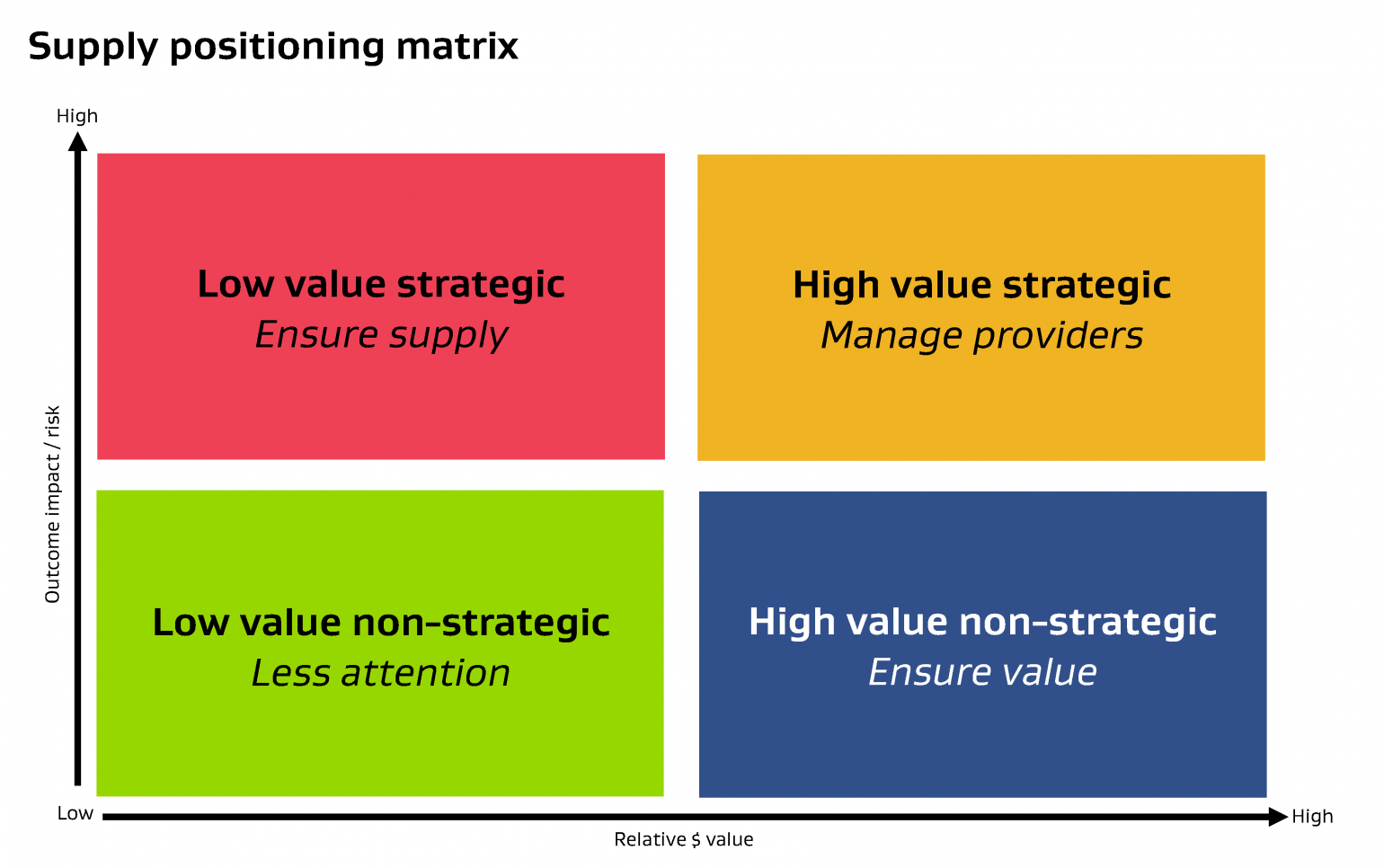
Understanding the supply positioning matrix
|
Type of Relationship |
Agency priority |
Description |
Approach |
Arrangement |
|---|---|---|---|---|
|
Low value strategic |
Security of service |
|
Ensure supply |
|
|
High value strategic |
Security of service at a good price |
|
Manage providers |
|
|
Low value non-strategic |
Maximise efficiency in sourcing services |
|
Less attention |
|
|
High value non-strategic |
Improving value through actively working with suppliers to seek efficiencies |
|
Ensure value |
|
2. Analyse market behaviours
Once you understand how the market functions, you need to know how suppliers or providers view your business and how they behave as a result.
Your value as a customer
Many businesses evaluate their customers' worth to determine the amount of effort they'll exert to maintain the account.
Analysing this can identify changes an agency may need to make in order to be seen as a more attractive customer - meaning there will be more competition among suppliers to get your business.
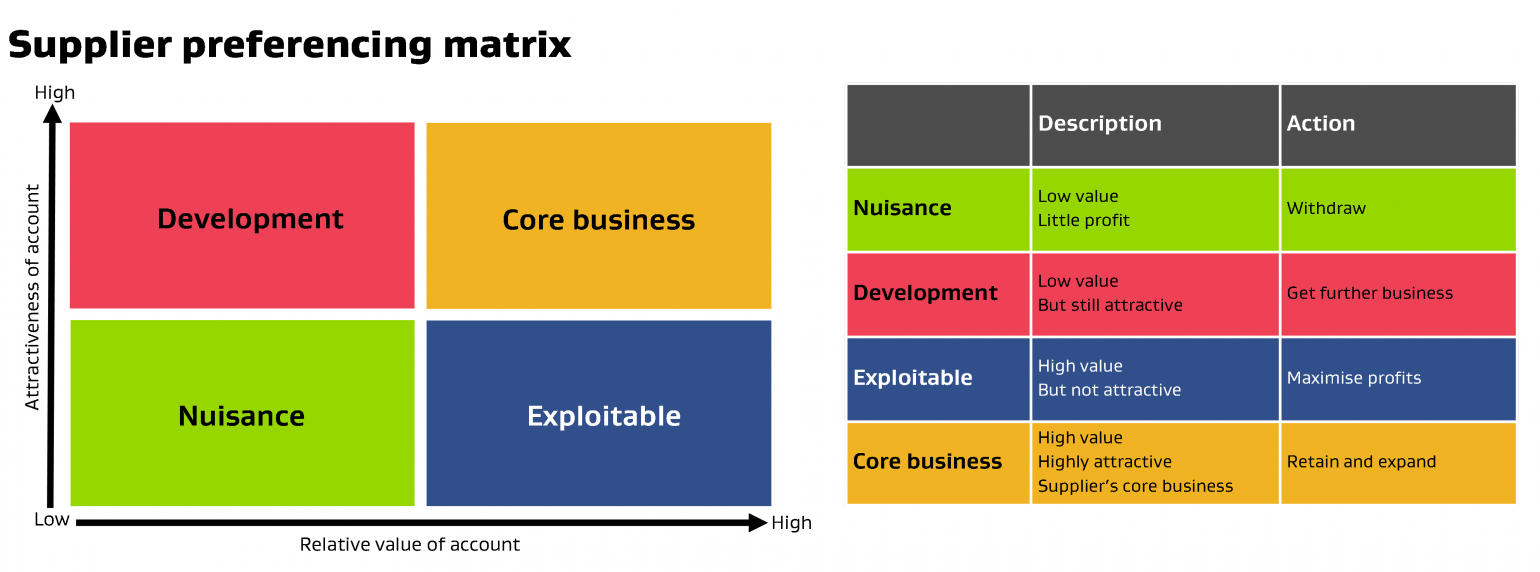
If your agency is viewed as:
- a nuisance account, the supplier may show little interest in your business. You may wish to consider sourcing from other suppliers who value the agency’s business more highly
- having development potential, the supplier may be willing (at least in the short term) to meet your requirements in order to win more business. E.g. you may be seen as attractive because of the potential for more valuable business in future
- being an exploitable account, the supplier may have a high volume of sales but the account is still regarded as unattractive. This may be due to low profitability, or other factors such as the length of time it takes to get paid. Where suppliers seek to increase prices, you may wish to look for alternative suppliers or try to make the relationship more attractive by considering more efficient ways to do business
- a core part of the supplier’s business, then in most cases you can establish a rewarding business relationship in which both parties continually seek to add value. The supplier is generally keen to meet the buyer’s requests, e.g. responding to efficiency improvements or reducing the environmental impact of a procurement, and provides a high-level of service in order to retain the business.
3. Understand the full picture
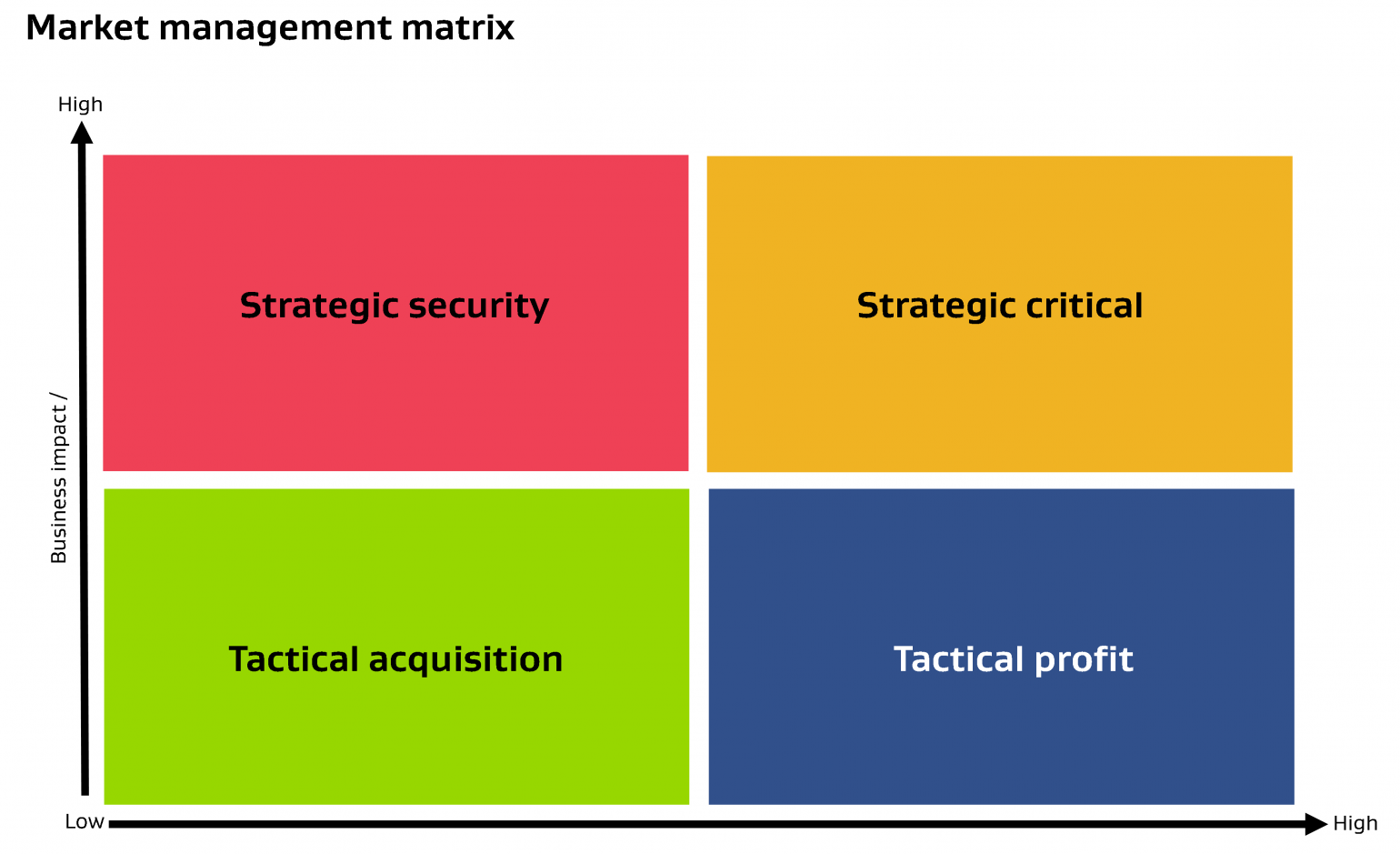
Combine your findings from the Supply Positioning and Supplier Preferencing matrices to understand the full picture and identify areas of potential risk.
Market management matrix
If your procurement is in the strategic critical quadrant, but your business is viewed by suppliers as ‘nuisance’ or ‘exploitable’, this creates a risk in supply. You may need to work to change suppliers’ perceptions of you as a customer to increase their interest and move you to ‘development’.
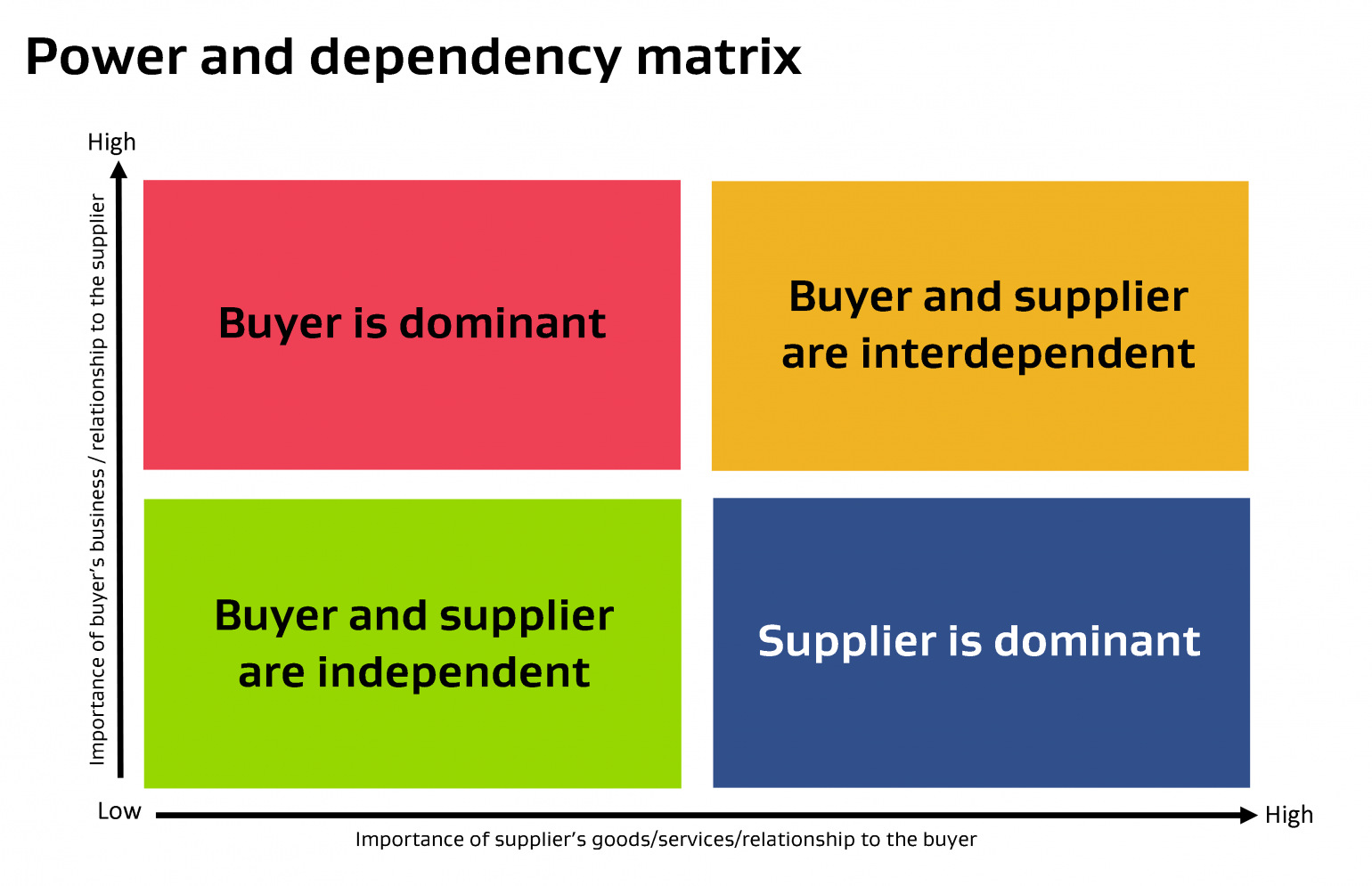
Power and dependency matrix
Assess the levels of power and dependency between your agency and individual suppliers or providers - situations where a supplier is highly dependent on your agency (or vice versa) can be high risk.
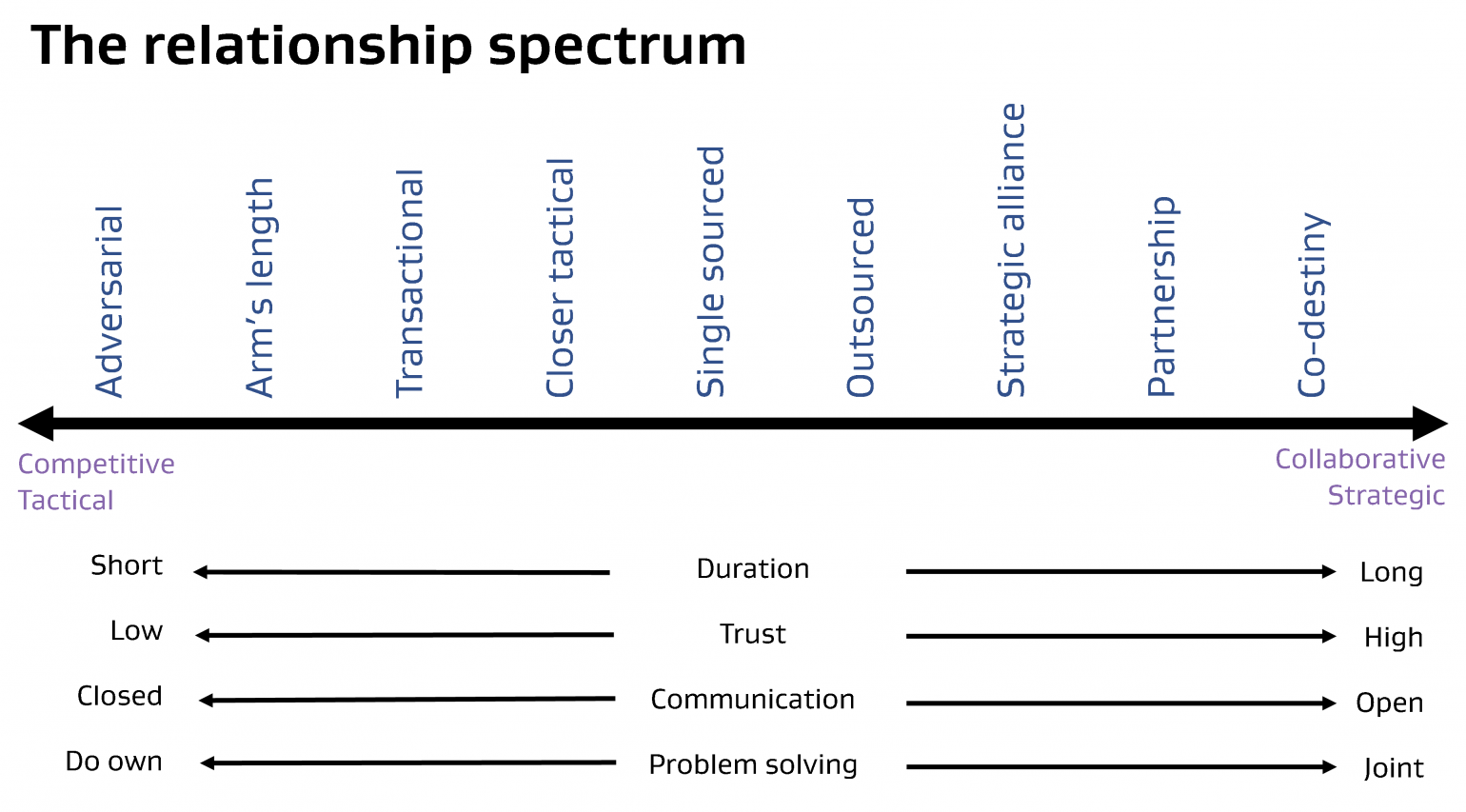
Relationship spectrum
The relationship you develop with a supplier or provider can range from competitive to collaborative. A competitive relationship can be 'win-lose' if one party gains at the expense of the other. A collaborative relationship is ‘win-win’, where both parties benefit.
4. Market behaviour tactics
Consider if there are any procurement marketing tactics you could use to improve competition and the range of solutions that are accessed.
These market behaviours tactics include:
- procurement marketing - selling the full range of benefits of supplying to your agency and/or the status of being associated with your agency to help suppliers see you as a desirable customer
- supplier development - offering to support or assist with the development of a supplier or their services, eg being open to using new innovative solutions and prototypes
- partnership approach - either formally, eg through a public-private partnership arrangement, or informally through a close, collaborative approach which is mutually beneficial
- financial incentives - eg share cost/price reduction through innovation
- risk-sharing arrangements.