

Working to rebuild Tonga's home of democracy
Tonga, New Zealand and Australia have shaped a project that reflects shared commitment, regional cooperation, and a long‑term investment in Tonga's democratic future. Procurement has played a vital role in getting this job done.
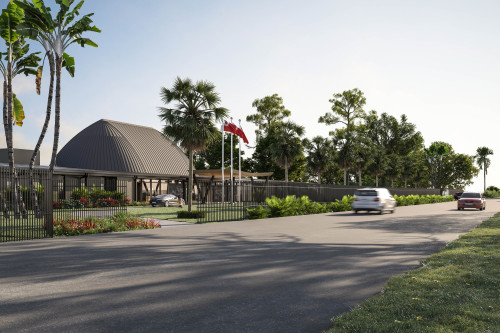
An artist's impression of the new Tongan Parliament building. Image: Supplied
Fale Alea 'o Tonga, Tonga's Parliament building was destroyed by Tropical Cyclone Gita in 2018.
The destructive weather event also took out the Office of the Legislative Assembly.
Since then, Tonga has been without permanent locations for these two critical pillars of its democratic processes, but that will change when a new Parliament complex opens in 2027.
With support from the procurement team inside the Ministry of Foreign Affairs and Trade (MFAT), Tonga's home of democracy is being rebuilt.
MFAT's Ryan Ingleton, Senior Commercial Adviser in the Commercial Division is part of the team leading this effort.
"Being involved in the rebuild of the Tonga Parliament Building is a genuine honour," Ryan says.
The Tongan Parliament rebuild is a landmark trilateral initiative between the Kingdom of Tonga, New Zealand, and Australia, aimed at delivering a project of lasting national significance.
"This is not just a construction project - it's a once‑in‑a‑generation opportunity to contribute to something deeply meaningful for the Tongan people and the wider Pacific region.
Putting Tongan people and Tongan businesses first
Project specifications ensured local Tongan businesses and people were central to the rebuild.
"A key part of the project's procurement approach was a combined focus on local content and broader outcomes. This ensured the rebuild delivered benefits beyond the physical construction. Respondents were required to engage with Tongan suppliers, contractors, and workers, creating genuine opportunities for local businesses to participate in the delivery of a nationally significant project.
"At the same time, commitments to employment pathways and skills development were built directly into the evaluation criteria. This included practical capacity‑building initiatives such as on‑site skills training, formal trade certifications, supervised apprenticeships, and structured mentoring programmes - designed to strengthen Tonga's long‑term construction capability."
The procurement plan centred on transparency and fairness
The procurement strategy was shaped by 3 key factors: tight time constraints, a fully developed design, and the need for a transparent, open‑market process, Ryan said.
Given the accelerated delivery timeframe, MFAT selected a single‑stage procurement approach.
"To enhance the competitiveness and quality of responses, MFAT made the necessary design documentation available through a controlled non‑disclosure agreement process. It held one‑on‑one supplier briefings, so respondents had a consistent understanding of the scope, constraints, and delivery context.
"Technical clarity helped suppliers to price with confidence and supported MFAT's goal of securing a fixed‑price contract, minimising cost uncertainty," Ryan said.
"This was particularly important given variable supplier capacity, capability, and interest across Pacific locations."
The project used the NZS3910:2023 construction contract, with tailored special conditions to reflect development‑cooperation objectives and location specific considerations like insurance.
"In evaluating the main contractor, we utilised clarification workshops to address key areas such as provider capability, assessing and confirming the panel's confidence in each proposal; and pricing structure, ensuring all cost elements were included, identifying any gaps, and evaluating overall public value."
Other procurement techniques used included early contractor involvement and value engineering delivered through a pre‑construction services contract. This approach played a critical role in reducing costs and mitigating risks by enabling collaborative design reviews. This meant the project team could identify more efficient construction methods and materials at an early stage.
A distinctive feature of the approach was MFAT's use of a public value assessment rather than traditional price weighting. This allowed proposals to be evaluated on the outcomes they would deliver, with cost considered in relation to the quality and benefits offered. By framing decisions around overall public value, the process supported transparent decision making and ensured MFAT selected the proposal that best balanced quality, risk, and cost.
Adapting to and building for climate change and cyclone risks
Given Tonga's vulnerability to climate change and extreme weather events, the new Tongan Parliament Building has been designed with resilience at its core.
"The building is engineered to endure a 1‑in‑1000‑year storm event, with structural elements designed to resist cyclones, earthquakes, and storm surges."
One of the most significant changes was the relocation of the Parliament site from its previous coastal location to the Talangaholo Royal Estate, which sits on higher, safer ground.
MFAT worked closely with designers with expertise in climate‑resilient architecture and engineering.
"The building is also designed to serve as an evacuation centre for the public during emergencies. This adds a layer of community protection beyond its parliamentary function," said Ryan.
In addition to structural resilience, the design incorporates solar panels and battery storage, supporting energy independence and sustainability during power outages or grid disruptions.
The story behind the architectural design and why it matters
The architectural design of the new Tonga Parliament Building blends traditional Tongan cultural elements with modern climate‑resilient features.
At the heart of the design is the fale‑style roof, directly inspired by the buildings at Sia'atoutai Theological College. Designers studied the roof structure and construction methods used at the college to understand how they differ from other fale traditions across the Pacific.
"Local suppliers working with our main contractor on the project will ensure these traditional techniques bring authentic craftsmanship into the modern Parliament.
"Together, these architectural choices reflect deep respect for Tongan heritage, a commitment to inclusive governance, and sustainability. The building is not just a seat of government - it's a symbol of Tonga's identity, strength, and democratic future," said Ryan.
The new complex includes:
- A public viewing gallery, supporting openness and civic engagement.
- Public consultation spaces designed for large gatherings, with seamless flow into outdoor areas to encourage public dialogue.
- A dedicated education and outreach centre, aimed at sharing knowledge and inspiring future generations of Tongans.
- A broadcast studio, enabling media coverage and wider public access to parliamentary proceedings.
Ryan said the scale and prestige of the building make it a national symbol.
"Knowing it will play a central role in Tonga's democratic life for decades to come adds a profound sense of purpose to the work. For everyone involved, there's a strong sense of pride and responsibility.
"This is a building that will be remembered, not just for its architecture or engineering, but for what it represents: sovereignty, democracy, and legacy."
How the Kingdom of Tonga, New Zealand, and Australia worked together on a long and complex project
The new Fale Alea 'o Tonga and the Office of the Legislative Assembly will stand as enduring symbols of shared democratic values and regional partnership. The collaboration is especially meaningful, as 2025 marked 55 years of diplomatic relations between the 3 nations.
Tonga leads the tri-party governance and design of the project, ensuring cultural integrity, local ownership, and alignment with national priorities.
New Zealand, through MFAT, serves as the lead delivery agency managing procurement, contracting, and construction, and ensuring the project is delivered to a high standard.
Australia, through the Department of Foreign Affairs and Trade and the Australian Infrastructure Financing Facility for the Pacific, provides strategic co‑funding and governance support.
Together, the 3 partners have shaped a project that reflects shared commitment, regional cooperation, and a long‑term investment in Tonga's democratic future.