

Where do we get our radioisotopes from?
This is the complex story that shows the role procurement plays in sourcing an incredibly important part of New Zealand’s healthcare system.
Ever received treatment for a tumour? Or maybe people needed to find an injury you had suffered?
What are the challenges of sourcing one of the key medical tools for the country that you needed?
Health New Zealand Te Whatu Ora’s Imaging Category team is responsible for the nation’s importing of Technetium generators.
The generators are used to help with a range of procedures and including detecting injuries, infections, kidney conditions, and tumours.
“A lot of people think what we bring is uranium. It’s not. We don’t procure uranium. Nuclear Med departments have standing orders for ‘Technetium generators’, a portable, medical device containing the isotope technetium.”
Health New Zealand spokesperson
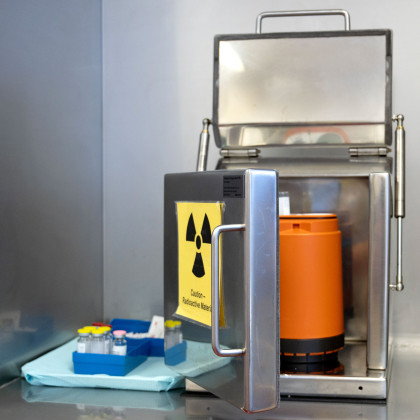
Isotopes are drawn from the technetium generator before being administered to a patient. Photo: Health New Zealand Te Whatu Ora
These generators have been used for over 50 years to deliver technetium, a radioisotope used in nuclear medicine procedures in hospitals and medical clinics.
New Zealand sources its generators from Turkey, the Netherlands and Australia.
“The reason for our supplier using 3 types of generators is to make sure there is always an alternative supply when there are issues with transport or production."
“Working in partnership with this critical supplier is key to successfully delivering this critical medical service.”
Technetium generators are a complex topic.
It is not about the nearest reactor because there is a global distribution network for the supply of the parent radionuclide Molybdenum-99 (Mo-99), which is what is called a fission byproduct from a nuclear reactor.
This generator lasts up to 2 weeks. Larger departments need a weekly delivery.
The parent radionuclide, Mo-99, has a 66 hour half-life. It decays in the generator to produce 99mTc Technetium, which has a 6 hour half-life. This is eluted daily to make Health New Zealand’s doses.
There is a global system for sharing Molybdenum-99 around to cover demand.
The Health New Zealand spokesperson said there was a supply issue during COVID-19 when the incoming flights shut down but there were contingencies built into the plan.
“We experienced supply issues. It showed our vulnerability to the supply line logistics and politics.”
One of the contingencies Health New Zealand has implemented is to have some patients undergo positron emission tomography (PET) imaging instead.
“It’s something Health New Zealand makes available through the private health system. This uses New Zealand generated radionuclides coming out of the cyclotrons in Wellington and soon from one in Auckland.
“Many New Zealanders don’t know we produce radioactive material, albeit a very short half-life. In hospitals alone there is a lot of use of radioactive materials, from tiny quantities used in laboratory assays, through to huge amounts in radiation oncology cancer treatments.”
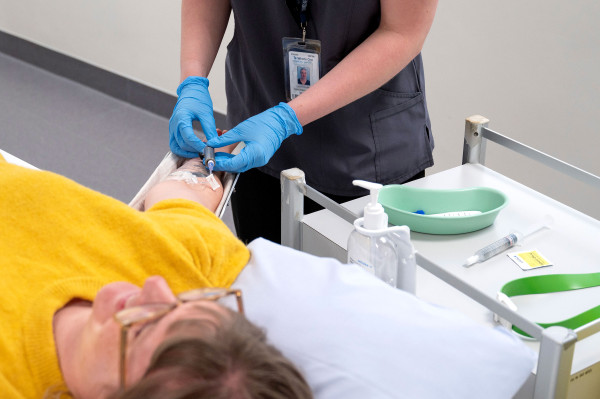
An isotope injection is administered to a patient. This is where a small amount of radioactive material (tracer) is injected into the body to help visualise organs, tissues, or bones using nuclear medicine imaging. Photo: Health New Zealand Te Whatu Ora