

Procurement keeps Christmas running in Palmerston North
Santa’s Cave attracts thousands of visitors every year. It is a unique museum experience. It is filled with intricate displays including motorised models that require specialised support.
One of the oldest celebrations of Christmas in New Zealand happens in Manawatū.
It’s the Santa’s Cave exhibit at Te Manawa Museum in Palmerston North, where collections needs are supported by specialised procurement.
Santa’s Cave has been in existence since Christmas Eve, 1918. It started off at a local department store, called Collinson and Cunninghame (C&C), whose owners wanted to bring some festive cheer to a city suffering after World War I.
For a fee, visitors could descend a set of narrow stairs to the store’s basement. There, they would be delighted by scenes from fairytales and nursery rhymes, acted out by intricately crafted puppets and mechanical figures set in diorama displays.
A selection of these displays are now in the care of Te Manawa Museum, where they can continue to be enjoyed as well as preserved. For 8 weeks each year, the team at Te Manawa opens the cave to the general public, inviting them to marvel at the moving displays, some of which are almost a century old.
Te Manawa Museum’s Heritage Curator, Karis Evans, explains the unique nature of Santa’s Cave means preservation and procurement go hand in hand as each display runs on a motor that keeps each puppet moving.
“Unlike other items in a museum collection, these displays came to us with a special caveat allowing us to replace and repair as needed to keep them running, rather than stabilise and preserve them in a fixed state as we would with other collection items. I would estimate the motors are among the most regularly replaced items, with components being removed, repaired, and replaced as and when needed.
“From time to time we work with graphic designers and external printing companies to add new interpretive text.
“Another recurring procurement is to renew the general collections care kit, such as cotton swabs, gloves, and Perspex cleaner to keep everything looking spick and span.”
The Collections and Curatorial Team does an annual check of each display.
“This includes a condition report in which we track deterioration that may have occurred and remedy it.
“We clean the cases during this time. A recent example of some conservation work that took place was in 2024. A scene depicting ‘The Old Lady in the Shoe’ includes a woman that pushes washing through mangle. These clothes had become quite worn and dirty after many decades of repeated wringing. We undressed the figures in this scene, delicately washed the clothing, patched the worn garments, and replaced others by sewing new pieces ourselves.”
The most recent procured items for the Santa Cave collection are props for the retail area where people visit Santa.
“These new items are to boost the festive feel. These items included a larger-than-life nutcracker who sort of ‘guards’ the entrance as visitors come to see Santa. Imposing perhaps, but wonderful nonetheless.”
The props are procured from Marton meaning there is an expected economic benefit for the local economy.
“When it comes to securing materials for our exhibitions we try to keep it local.”
The caves are important for the culture and community of Manawatū.
Santa’s Cave is a unique museum display. The Cave is similar to what many New Zealand department stores would have operated during the mid-20th century but very few are as complete as ours.
Karis Evans Te Manawa Museum’s Heritage Curator
It attracts thousands of visitors every year and most are people who have been coming for decades. Adults who once visited the Cave with their parents bring their own children and indulge in the nostalgia of this Palmerston North attraction.
Interesting facts:
- Santa’s Cave was in the basement at Farmers’ department store Palmerston North.
- Before that, it was part of Farmers’ predecessor, Collinson and Cunninghame.
- The most complicated part of Santa’s Cave’s history was its move to Te Manawa. That process started in 2009 and took about a year. Each display case is incredibly large and not really designed to be mobile, so a lot of work was involved, especially for the museum’s Collection Manager, who was responsible for the record keeping and physical care of each display that came into the museum’s care.
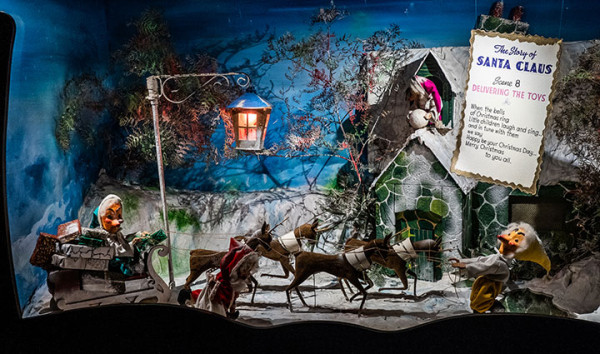
Santa’s Cave exhibit at Te Manawa Museum in Palmerston North. Photo: Te Manawa Museum Trust