

Possum tracking drones projected to bring economic benefits
It’s early days for a drone trial tracking the locations of possums, but initial planning has shown these types of drones can give high quality information about the possum and other species populations in an area, particularly in areas hard to assess. OSPRI Procurement and Contracts Manager Ray Yates talks through procurement’s role in this project.
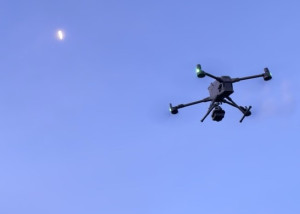
The thermal imaging drone trial procured by OSPRI aims to improve the ability to track and monitor hard-to-reach possum populations. Photo: Interpine
One of the organisations responsible for fighting New Zealand’s biosecurity responses is trialing a new weapon.
OSPRI has procured the services of a drone operator to trial identifying and tracking possums, a key aspect of its work to eradicate Bovine Tuberculosis (Bovine TB) from our cattle and deer herds.
OSPRI is a not-for-profit organisation that supports farming and the New Zealand Government’s response to livestock diseases like bovine TB and Mycoplasma bovis, both crippling diseases for animals and risks to New Zealand’s economy.
OSPRI's manager of procurement and contracts, Ray Yates, has finished the tender part of the project that trialed a thermal imaging drone to find the possums in hard-to-reach countryside.
"It went well. Every project has its challenges, and this one was no different. The key challenges I had to address with the market included needing to attract interest in a rapidly emerging sector, incorporate how AI, or machine learning, could enhance the required output, and have landowner approval to undertake the trial before the RFQ could be issued.
"The supplier had to source numerous permits to operate, so OSPRI also needed to support the provider's application. And we had to account for the risk of adverse weather events which could disrupt operations".
The tender process attracted 14 valid responses from primarily New Zealand suppliers already operating drones in commercial settings.
OSPRI Procurement and Contracts Manager Ray Yates. Photo: OSPRI
"We chose Rotorua based supplier, Interpine.
"Their drone can survey vast areas of difficult country, using a thermal camera to detect animal heat signatures. Once an animal is spotted, the drone camera captures high-definition image and location data for species identification and population mapping."
The drone trials were conducted in the Otago and the Bay of Plenty.
"This area primarily consists of open or low height forest cover, like tussock land where the terrain and scale tend to be the areas where it is very difficult for us to use our traditional methods of assessing the size of a possum population.
"The use of the drone’s image capture with density mapping will provide greater accuracy in the location survey and highlight those high-density areas which need to be targeted."
During the trial, the image and location data is recorded by the drone for further analysis to assess the possum populations in a given region. This information helps determine the size of the possum population, how successful existing possum trapping and aerial operations are, and which areas should be targeted for treatment.
"The drone and its work mean OSPRI, and the farmers and taxpayers who fund us, can be reassured the resources it is using to target possum populations are working in the right places," Ray said.
It's early days for the OSPRI drone trial, but initial planning has shown these types of drones can give high quality information about the possum and other species populations in an area, particularly in areas hard to assess.
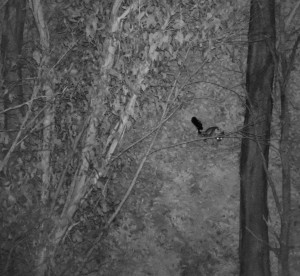
A possum is caught in the trees by the drone. Photo: Interpine
Another aim of the trial was to test the capability of AI or machine learning to aid in species identification during the actual survey, rather than being purely reliant on the drone pilot.
"This will require the establishment of a significant library of images to allow training and development of that functionality. This work is still ongoing as OSPRI continues to source additional images, outside those obtained in the trial."
Ray said there are huge potential economic benefits from this drone procurement.
"New Zealand spends $60 million a year on the TBfree programme. Our goal is one day soon farmers and the Crown will not have to spend that sort of money on bovine TB eradication."
OSPRI plans to share the data captured from the drone’s thermal imaging with local councils and the Department of Conservation, so they are informed on the populations of other pest animal species for similar control activities.
New Zealand’s goal is to be TB free by 2055.