

Focus on Procurement – NZGP principal procurement specialist Oscar Lloyd
From starting out in the procurement graduate programme Oscar Lloyd has built a career based on how best to help people including mentoring people new to the field.
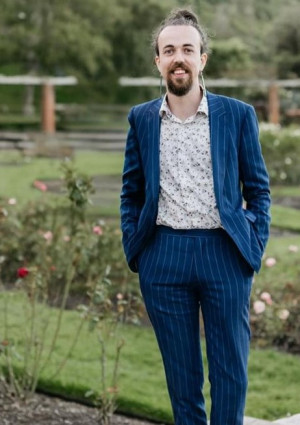
Oscar Lloyd. Photo: Supplied
Where are you from?
I am from the beautiful Kāpiti Coast, living in Wellington.
What did you train in and where did you study?
I studied International Relations, Japanese, and Marketing at Victoria University.
While growing up you received the Prime Minister’s Scholarship to Asia. How has it influenced your outlook?
I received this scholarship for my Japanese studies - and it took me off to central Tokyo for a year. I studied at Gakushuin University, fully immersed in Japanese language.
It's truly hard to overstate the influence this had on my life and outlook, there's something special about immersing into a whole new world on your own. I made lifelong friends, gained fluency in another language, and there's been an element of 'if I can do that, surely I can do this,' in my mindset towards challenges both personally and professionally.
I actually ended up working at the Ministry of Foreign Affairs for a few years - maybe it influenced that step of my career too?!
What attracted you to a role in procurement? And what keeps you here?
To be blunt, I was a graduate and wanted a job. I'd studied marketing, and determined procurement was basically marketing in reverse, and saw a graduate programme that appealed to me. When I interviewed, I still didn't really know what it was. Apparently, that worked out - here I am all these years later.
What keeps me in procurement is two-fold; I love people, and I love variety. Good procurement, in my view, comes from good engagement and communication, ideally based on good data, needing to work out what's important to who, and what needs to be leveraged to get the best outcome. It's deeply people-focused if you manage to cut through a few layers of process and paperwork.
I primarily work on a project-by-project basis, so the variety comes from the broad range of subject matter I get to work with. Variety is the spice of life for me, and it's a fun privilege to get such diverse views into so many different professions, priorities, and places - particularly in the public sector and its breadth.
What advice would you give anyone considering a career in procurement?
Given it seems half our profession 'fell into procurement', I'd say taking advantage of any formal pathways, such as tertiary study, graduate programs, would be beneficial, but certainly not a requirement. Everyone experiences self-doubt, you just have to try things anyway.
There's a heap of transferable skills to and from other professions like anything logistics based, operational policy, engagement, business analysis, etc which make for convenient pathways into the profession, or as next steps from a procurement role.
What are 3 things the public do not know about the role of procurement in their lives?
- The ubiquity of procurement sitting behind the delivery of everyday public services they interact with. It's not just buying transactional supplies.
- The scale. Procurement accounts for a huge chunk of GDP, and when people are talking about efficient use of their hard-earned tax dollars, procurement is often missed.
- Procurement drives public value beyond just spending coin. Our system is designed to deliver economic, social, and environmental benefits in addition to cost savings.
Can you please detail your top 3 achievements from your time in procurement?
- Delivery of APEC 2021. I was part of the commercial crew that managed all procurement and commercial activities for the delivery of what was going to be the biggest physical event held by the New Zealand government (~20,000 attendees, including 21 world leaders). COVID-19 happened, leading us back to the drawing board to lead all the procurement and commercial activity for a fully virtual APEC 2021. Specific highlight - procuring a garment that was worn by the world leaders.
- Lean Agile Procurement (LAP) on a couple of major projects. I am always trying to drive innovation and testing fresh ways of doing things. Getting governance and do-ers on side to successfully deliver LAP on high risk and high value procurements is a serious highlight. It's a really invigorating way to drive collaboration and competition.
- Giving back to the procurement graduate community. I came through the Government Procurement Graduate Programme and am a massive advocate of its benefits. I'm really happy I've been able to stay involved with current grads and alumni in both a mentoring and support role, as well as a learning one.
What is the most exciting thing happening in procurement right now?
We're well and truly in the spotlight right now, between the imminent launch of a procurement platform, a new version of the Rules, and political interest in how procurement can be used to drive policy outcomes. It's all quite exciting and serves to put procurement on the radar.
Can you talk about the impact Covid-19 had on procurement practices that you observed?
In my personal capacity - I observed the impact of having to re-do a couple of years of work, with a new twist!
Generally, I think it highlighted the Government's ability to work quickly and effectively in a strictly outcomes-focused and collaborative fashion. We saw a lot of things happen really quickly, which served the needs of the time. With the benefit of hindsight, I also think it highlighted some teething problems for post-emergency situations and the transition back to business as usual from arrangements established in haste. Plenty of learnings there.
Longer term, it has shifted a lot of procurement approaches to be more accessible and simpler with a sharp transition to virtual delivery of bids or services. It's a double-edged sword as often a face-to-face conversation is going to produce better outcomes, but ultimately, I am in support of anything that reduces the admin for participation in procurements for suppliers. Use the right approach for the right stuff!
In an ideal world where you were not confined by a budget, what would you introduce to procurement that could help the industry function and develop?
Not the answer with the most 'wow factor' but consistent data standards across the entire profession and fit-for-purpose tools to collect and aggregate that would be a game changer. It would gear us up to be more strategic, less reactive, and spot and act on trends we don't even know are there. A boy can dream.
In your opinion what is New Zealand’s greatest contribution to the procurement community here or internationally?
New Zealand's principles-based procurement system is, in my view, its greatest contribution.
Our system is set up to allow for greater flexibility and responsiveness from the get-go. The focus on core principles simplifies compliance and reduces administrative burden by enabling agencies to exercise their own judgements and tailor strategies that fit their needs and their environment. This on the whole is better than slogging through a tome of prescribed tasks and processes, in my humble opinion.
I think the simplicity also serves to create better ethical standards and integrity, which in turn helps build trust in public procurement. There is a really strong expectation to act in good faith which fosters the right culture.