

Focus on Procurement interviews: Olivia Tuatoko, Strategic Procurement Specialist and Lesa Laga Procurement Advisor
At Maritime New Zealand, Olivia and Lesa steer procurement building strong relationships and provide practical support across the organisation. In this conversation, they share how they help teams navigate decisions and what first drew them aboard the procurement career journey.
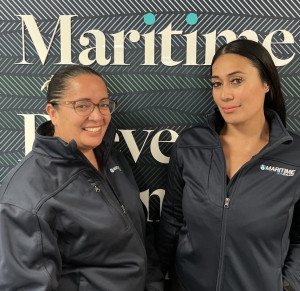
Olivia Tuatoko and Lesa Laga at Maritime NZ. Photo: supplied
Tell us about yourselves?
Lesa and Olivia are both based in Wellington. Lesa growing up in Porirua and Olivia in Napier.
Both Lesa and Olivia are proud Samoans. “We’ve found our Samoan values have grounded us in humility, openness and a deep respect for diversity, which has strengthened our ability to navigate complex environments and build meaningful, culturally aware relationships within our procurement roles. It’s part of our identity.”
Olivia says, “my journey has been shaped by how I can cater for my family. As an independent mother of 3 I’ve been able to learn to quickly assess options, negotiate value and strategically plan ahead, more so now with teenagers. By putting those everyday tasks into a career such as procurement it gives my brain a clear process to get to what is important and be able to come home to be fully present.”
Lesa says, “my journey has been shaped by a variety of experiences. Through family, my career opportunities, being a retired New Zealand volleyball player and now embracing life as a mum to a 5-year-old little boy. As Olivia pointed out, finding the balance between building a career and being a mum is both tough and incredibly rewarding. Each role has brought its own challenges, experiences, learnings, and dynamics. Each chapter building resilience, adaptability and has strengthened my perspective along the way. I am always grateful for how it contributed to my personal and professional growth”
How did you choose procurement as your careers?
Lesa says, “a role became available, and I decided to take a chance and apply despite coming from a security, risk and assurance background and knowing very little about procurement. Stepping into the role, I learnt on the job with the support of experienced senior colleagues who guided me and helped build my knowledge. Their mentorship enabled me to successfully transition into procurement and develop an understanding and learnings in the field which continues to grow in my current surroundings.”
Olivia says, “I fell into procurement many moons ago. I was a contract manager when I first heard the term procurement. Like many people, at the time I rolled my eyes wondering what it will help me with, especially when I was engaging directly with communities and already heard what was needed to be done, but it has won me over. By providing me with a structure that is logical, balanced, and fair and when done right, achieves great results for everyone.”
What do you like about your career in procurement?
Lesa says, “one of the most rewarding parts of the role is getting to meet and learn from other professionals in the field. On top of that, there’s real satisfaction in being part of an organisation delivering meaningful work across New Zealand. Seeing the impact, understanding the priorities, and knowing the role you played in those projects along the way makes it all feel worthwhile.”
Olivia says, “there are many reasons I enjoy working in the procurement field. Without sounding cheesy, it’s the people you meet. Listening to their needs and finding the solution to make their job a little bit easier.”
What advice would you both give your younger selves when you were first starting out in Procurement?
Olivia says, “you will come across lots of people that don’t like procurement or use it as a reason as to why they haven’t planned well. Understand that everyone is on their own learning journey and it is never targeted at you as an individual. Learn to be comfortable being part of uncomfortable conversations.”
Lesa says, “build genuine relationships and trust. Bring your authentic self to the work. You don’t need to have every answer to add value, and it’s okay to get things wrong because that’s how you learn. Don’t be afraid to use your voice, even when conversations feel uncomfortable or challenging those moments are often where the most meaningful progress is made. Learn to sit with discomfort, to ask questions and to have honest conversations with confidence and care.”
Can you talk about the environment you work in?
Working within Maritime NZ, our roles extend beyond traditional end-to-end procurement to supporting our own readiness and incident response capability. We also participate in Coordinated Incident Management System (CIMS) training, which has provided us with the capability to contribute logistical support when required.
This experience has strengthened our understanding of how critical it is to identify and balance diverse stakeholder needs during an incident. It reinforces the value of procurement’s role in ensuring resources, services, and decision‑making processes deliver the best outcomes under pressure.
How does the procurement function work in Maritime New Zealand?
There are 2 people in our team. We have a model that is a mix of centralised and decentralised. Our function provides specialist advice and expertise to the business, and business teams have responsibility for their own procurement.
As a small procurement function, relationships and building trust are key to being able to deliver good procurement processes. The trust developed lets us help when building procurement maturity. This in turn enables better decision-making and providing solutions that are fit for purpose to support Maritime NZ needs.
What are 3 things people may not know about the difficulties of having to procure for the marine environment?
As a response agency, Maritime NZ needs to be ready and equipped to respond to a national maritime incident or oil spill response. In this instance, our procurement approach is focused on building a capability and assets we may never or only seldom use.
Other challenges include a reliance on outsourcing to build capacity and capability for maritime incident response. Understanding ocean environments takes time. We count on our knowledge experts who have deep understanding of the maritime sector, the dynamic nature of response, and are aware of the latest innovations to meet the needs of the time.
We’re limited both by our small size and limited market. We often do not have a lot of leverage to negotiate terms so building and maintaining good relationships is important.
Given how big and small the projects are that your team takes part in, and how some of those are quite reactive, are there any bits of advice you can give other procurement officers or people new to procurement who have to pick it up fast?
Know your business. Work closely with the knowledge holders and experts. Make sure there is a clear understanding on what they want to achieve to meet their needs. If in doubt, always ask questions to the ones that know, even if they are external. You are not expected to know it all so be kind to yourself.