
Focus on Procurement interview: Dave Colquhoun, Auckland Council Group Te Kaunihera o Tāmaki Makaurau
Dave was part of the team of 2 that set up the first procurement function in the Royal New Zealand Air Force in the early 2000s: the Directorate of Aeronautical Procurement. Now he’s a leading voice in the country’s biggest council, as General Manager of Procurement Services at Auckland Council Group. He talks to us about his career, what procurement means for everyone, and ethics.
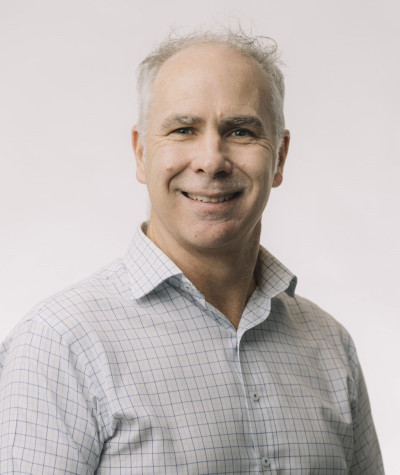
Dave Colquhoun, General Manager Procurement Services Auckland Council Group Te Kaunihera o Tāmaki Makaurau. Photo: supplied
Where are you from?
Originally from Oshawa in Canada, an outer suburb of Toronto, but moved to New Zealand at a young age and have spent most of my life here.
What did you train in and where did you study?
I joined the Royal New Zealand Air Force (RNZAF) straight from school and went into the Supply (now Logistics) trade. All my early military training was via the RNZAF but also included completion of a Bachelor of Business Studies through Massey University (Albany).
Throughout my RNZAF career I also completed several junior and senior leadership courses. Since leaving the RNZAF (2008) I have undertaken multiple types of training, including authentic leadership and have also completed a national certificate in sustainable practice from Otago Polytechnic.
What attracted you to a role in procurement? And what keeps you here?
Like many people, I ‘fell’ into it during my Air Force career when procurement became more prominent in New Zealand in the 1990s. Until then, my career had been focused on logistics and supply chain. A colleague and I proposed and set up the first procurement function in the RNZAF in the early 2000s: the Directorate of Aeronautical Procurement. Following this, I was fortunate to have a 4-year overseas posting to Washington, DC, working at the New Zealand Embassy in a New Zealand Defence Force role that had a logistics, supply chain and procurement focus.
Since leaving the RNZAF I’ve held various procurement roles as well as an aviation logistics company general manager role.
What I love about procurement is the direct impact that it has on communities, people and organisations, the wide cross-organisational involvement and influence that it has. It is one of few roles in business that does this. And seeing work come to fruition by way of assets being designed, built and maintained, or services provided that benefit the community.
What advice would you give your younger self if you could when you were first starting out in procurement?
Procurement can be a long game. You need to have patience, perseverance and resilience, but when you do, the outcomes can be very rewarding and satisfying. Along with the fact that there is a genuine career in this profession, something that was not entirely obvious when I started out in procurement.
What were you doing before you took up procurement?
I was in the Air Force where I had undertaken various logistics and supply chain roles as part of career development and progression.
What are 3 things the public do not know about the role of procurement in their lives?
- ‘Procurement’ has been involved in everything that we see and touch, from the quality of the air we breathe, the water we drink and consume, the food we grow and eat, the transport networks we use and the homes, buildings and spaces we occupy and use. Somewhere along the way, someone has procured something that has enabled these things to be part of who we are and help us lead the lives we do.
- Procurement is a key guardian when it comes to expenditure of money – your money and my money. Procurement’s role is to ensure that money is spent wisely and achieves good value, and that suppliers are treated fairly. Much of the public would not realise that there is a dedicated profession that does this.
- Procurement is a global profession with the backing of a chartered professional body (Chartered Institute of Procurement and Supply (CIPS)) that is equivalent to other professional memberships. This helps ensure standards of procurement practice, capability and development are consistent across the globe.
Can you detail your top 3 achievements from your time in procurement that you are most proud of?
- Assisting lots of people into procurement careers and supporting procurement staff with their progression and personal development.
- From starting out in procurement as a category manager to where I am today – leading one of New Zealand’s largest procurement teams.
- Finalist in the New Zealand Procurement Excellence Awards for Procurement Professional of the Year (2017).
What has been the most challenging procurement you’ve undertaken during your procurement career? And how did you get through it?
Too many! Procuring alliances can be challenging and complex and has tested my knowledge and stamina as they take time and thought. Having experienced people around to lean on and seek advice and knowledge from has helped me to understand how these work and how we needed to approach the procurement.
What is the most interesting thing you’ve procured in your career?
Military aviation parts from allies during the Gulf War in Saudi Arabia, where traditional procurement models were not going to work and there needed to be other creative solutions employed! This often involved forms of bartering and trading! I might not have passed the CIPS Ethics test had it been around then! But I managed to help keep the aircraft flying.
In an ideal world where you were not confined by a budget, what would you introduce to procurement that could help the industry function and develop?
A digital marketplace that connects buyers and sellers, aggregates demand and facilitates supplier responses to buyers automatically. This is not a new concept and there are examples around already, but what I am talking about is an AI-enabled system that is fast, removes much of the human effort, gets rid of that annoying, repetitive and subjective tender process, takes cost out of businesses and organisations and allows procurement staff to focus on more value-added activities such as category and supplier relationship management.
In your opinion, what is Aotearoa New Zealand’s greatest contribution to the procurement community here or overseas?
As a slow starter in sustainable procurement globally (achieving greater public benefits through procurement beyond the goods or services procured), New Zealand is now recognised as a leader in sustainable procurement, including the creation of positive economic benefits for underserved communities. Our focus on achieving positive outcomes for Māori in particular is seen as innovative and leading practice by other countries who also leverage procurement to support Indigenous community outcomes. I am proud to have played a (small) part in the development and continued sponsorship of this within the profession in New Zealand.