

Focus on Procurement – outgoing general manager Charlotte Payne reflects on her journey with CIPS
Charlotte Payne is known for combining strategic leadership with genuine, people-centred impact.
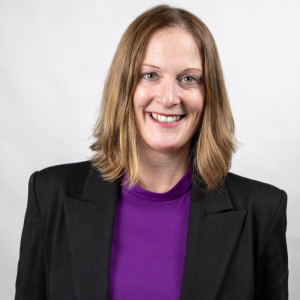
Haere ra e hoa. Charlotte Payne, outgoing general manager of CIPS across Australia, New Zealand and the Pacific. Photo: Supplied
Over more than two decades, Charlotte has led organisational transformation, strengthened professional communities and delivered sustainable growth across complex, values-driven environments. Charlotte has just stepped down from her role at CIPSANZ and has shared with us her reflections.
Where are you from?
I grew up in England's Lake District and consider Castle Bytham home, where my family is based. Since 2019, I've lived in Australia – currently in Gisborne in Victoria's Macedon Ranges, after relocating from the UK to Australia with CIPS.
What did you train in and where did you study?
I studied physics at Cardiff University and later completed an MBA (Strategic Procurement) at the University of Birmingham. The programme was CIPS-accredited, through which I attained MCIPS status.
What attracted you to a role in procurement?
When I first encountered procurement, I was intrigued by a profession I knew little about. What drew me in, and has kept me engaged, is its breadth, impact, and influence.
Initially, I believed it was education that motivated me. I found supporting people to achieve professional qualifications deeply rewarding. However, when I briefly worked with another professional body outside procurement, I realised it was the procurement profession itself that inspired me.
Procurement sits at the intersection of strategy, commerciality, risk, ethics, and sustainability. Its decisions affect organisations, communities, and economies. That breadth and societal impact create a constantly evolving and meaningful space in which to lead and make a difference.
What advice would you give anyone considering a career in procurement?
Procurement is an exciting and accessible career with significant long-term potential. The skills you develop; commercial acumen, negotiation, stakeholder management, risk assessment and strategic thinking, are highly transferable and valued far beyond the function itself.
Many people underestimate how well their existing skills align with procurement. Technical capability can be learned; what matters most initially is curiosity, judgement and the ability to build relationships.
It is a profession where you can make an immediate contribution while continuously developing your expertise.
What are 3 things the public do not know about the role of procurement in their lives?
First, procurement plays a fundamental role in shaping competitive markets and driving economic development. Creating effective competition often begins long before a formal tender is issued.
Second, procurement is central to identifying, mitigating and managing risk across entire supply chains; not just direct suppliers. These risks may be operational, financial, ethical, environmental or geopolitical.
Third, procurement is not simply transactional or reactive. At its best, it is future-focused; shaping supply markets, influencing innovation and enabling organisations to meet long-term strategic objectives.
Can you please detail your top 3 achievements from your time in procurement?
One of my most meaningful achievements was leading a programme with an African government to strengthen procurement capability within its government academy. The government recognised building professional procurement expertise was essential in addressing corruption, but was concerned about low qualification pass rates.
We focused on developing faculty capability, improving programme delivery and fostering collaboration between the government academy and private training providers. The result was significantly improved pass rates, increased numbers of qualified professionals, and expanded government sponsorship contributing to sustainable capability uplift within the public sector.
A second achievement was leading the implementation of remote exam invigilation across Australia and New Zealand during the COVID-19 pandemic. Launched in September 2020, the solution ensured uninterrupted progression for CIPS learners despite global restrictions. The model remains in place today, delivering accessibility and convenience while maintaining examination integrity.
Finally, serving as General Manager for CIPS across Australia, New Zealand and the Pacific has been the greatest professional honour of my career. During that time, we strengthened regional stability, grew membership and deepened community engagement. Most importantly, we enabled more procurement professionals to access globally recognised standards, training and accreditation – supported by a dedicated team committed to listening to and serving the profession.
What is the most unusual procurement project you've had to undertake?
Early in my career, I oversaw global paper-based exam operations, which involved delivering over 45,000 exams across more than 100 countries in a single exam period.
One seemingly simple procurement decision, the thickness of the exam paper, proved critical. If too thick, distribution costs increased significantly. If too thin, there were risks to security, durability and fairness.
That experience reinforced an enduring lesson: in procurement, even small specifications can materially affect cost, integrity and customer outcomes. It also sharpened my understanding of precision in communication – a skill that, interestingly, has become highly relevant in the era of AI and prompt engineering.
You've just finished your time at CIPS ANZ. In your role what was it like to work with so many different procurement communities across Australia, New Zealand and the Pacific?
It was both rewarding and a genuine privilege.
Working across such diverse procurement communities exposed me to a wide range of organisational contexts and levels of maturity. What was particularly interesting was that strengths varied – one team might excel in strategic sourcing while another led in supplier relationship management or sustainability.
This reinforced my belief that connection within the community is a powerful accelerator. When professionals share experiences and insights, the entire profession advances more quickly.
Are there opportunities for all 3 regions to work closer together?
Undoubtedly. Closer collaboration would accelerate learning, strengthen capability, and narrow maturity gaps with globally leading markets.
I often shared a light-hearted exchange with a Chief Procurement Officer who aspired to build the best procurement function in their country. My response was that the real ambition should be to build one of the best in the world.
Regional collaboration can help turn that ambition into reality.
Could you talk about ethics in procurement and where you expect the procurement community to move in the short to long term future when it comes to working in ethical frameworks?
Ethics in procurement is non-negotiable. In the short term, continued education is essential – both for procurement professionals and for all stakeholders who interact with suppliers. Ethical frameworks must translate into behaviours, empowering individuals to question and challenge inappropriate practices.
In the longer term, emerging technologies, particularly AI, will present complex ethical questions around transparency, bias, accountability and sustainability. Procurement will play a central role in setting standards and ensuring responsible adoption.
Ultimately, success in procurement should be measured not only by outcomes achieved, but by how fairly and responsibly those outcomes are delivered.
What is the most exciting thing happening in procurement right now?
While AI's ability to reduce transactional workload is significant, the most exciting development is the increasing visibility of procurement's strategic value.
Procurement is central to decarbonising supply chains, addressing modern slavery, enabling innovation, strengthening resilience and delivering commercial advantage. As business environments become more complex and interconnected, procurement's contribution becomes more visible and measurable.
It is encouraging to see organisations benefiting from this value and actively recognising and articulating it at executive level.
In an ideal world where you were not confined by a budget, what would you introduce to procurement that could help the industry function and develop?
If possible, I would give professionals the ability to pause; to step away from operational pressures and invest meaningfully in their development.
Talent shortages remain a persistent challenge and the pace of delivery often pushes continuing professional development aside. Yet organisations need more advanced, adaptable skills than ever before.
Sustained investment in capability – technical, strategic and behaviour – is essential if procurement is to lead confidently in an increasingly dynamic environment.
In your opinion what is New Zealand's greatest contribution to the procurement community in Aotearoa or overseas?
New Zealand's distinctive business environment – shaped by scale, geography, complexity and community – provides a powerful testing ground for procurement excellence.
The principles of good procurement are universal; however, how they are applied must reflect context. New Zealand demonstrates that high standards can be upheld and innovation achieved within a unique and often resource-constrained environment.
I hope New Zealand continues to share its leading practice globally, showcasing how adaptability, integrity and strategic thinking can thrive in any setting.