

Focus on Procurement interview: Tod Cooper, Director Procurement for the Department of Corrections
What is it like procuring when the stakes have real-world consequences? Tod shares the complexities of procurement at Corrections and why we need to get out from behind the desk and understand the world behind the price tag.
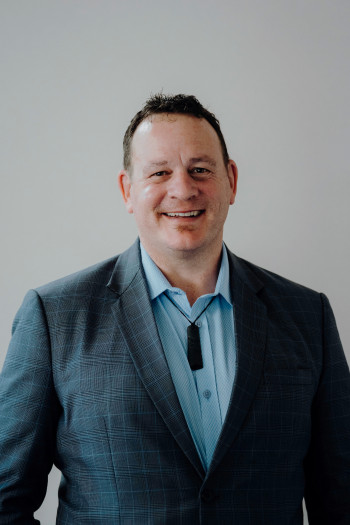
Tod Cooper, Director Procurement for the Department of Corrections. Photo: Supplied
Where are you from?
I am a P-town boy. I grew up in Porirua and I am a proud Wellingtonian.
What did you train in and where did you study?
I did business studies with the NZ Institute of Management and later Massey. When I was overseas with the Ministry of Foreign Affairs and Trade, I did papers with The Open Polytechnic of New Zealand.
What attracted you to a role in procurement? And what keeps you here?
I took a gap year to travel and work, and never went back, doing study extramurally. In my first role I was working for a private defence company, and we responded to a lot of tenders. At Ministry of Foreign Affairs and Trade, I worked in the Contract Management Unit within the New Zealand Agency for International Development. Once I was posted overseas, I managed suppliers as part of my corporate and consular role at the New Zealand High Commission, before returning to New Zealand to head up the Management Services Unit. This was all when procurement was shaping as a specialisation, rather than being a bolt-on to someone’s day job. I enjoyed working with the business to develop specifications and requirements and finding solutions through competitive bidding processes. I loved negotiating.
What are 3 things the public do not know about the role of procurement in their lives?
- Procurement is your ‘conscience’. Most people think procurement is just buying things. In reality, it is a constant balancing act of legal exposure, financial risk, supply chain fragility, ethics, privacy, health and safety, and public accountability. We’re the little voice saying, “yes, you can do that, but should you?”
- Procurement is your ‘fairy godmother’. New Zealanders rarely realise procurement teams are one of the strongest levers for shaping broader social and economic outcomes. It’s not just about value for money, it’s about who gets opportunity, who grows capability, and how government investment supports communities.
- Procurement are your ‘parents’, making sure everything just works. Products and services do not simply materialise. Behind every chair, contractor, IT system, or social service provider is a procurement team or person that has sweated the small stuff to ensure quality, safety, and reliability. If it looks effortless, that means we did our job.
What piece of career advice would you give to the younger version of yourself as they started out on their career in procurement?
Get out from behind the desk and understand the business, not only yours, but your suppliers.
Can you detail your top 3 achievements from your time in procurement that you are most proud of?
- Leading my team to win the 2025 CIPS ANZ Collaborative Project and overall Project of the Year award. This one means a lot because it recognised not only the project, but the collective mahi, resilience, and sheer determination of my team. Seeing their work acknowledged at that level was a real moment of pride.
- Being awarded the 2024 CIPS ANZ Procurement Leader of the Year. A huge honour and privilege. It’s humbling to be recognised individually in a profession full of incredibly talented people. It reinforced for me the importance of doing the work in a way that lifts the capability and reputation of procurement.
- Above all accolades, seeing people I have backed go on to succeed. Hands down, the greatest achievement is watching people I have given opportunities to grow, lead, and thrive. Knowing I played a small, hopefully meaningful part in their journey means more to me than any trophy. That is the legacy that matters.
You were on the board of Transparency International New Zealand. What was that experience like?
It was a great experience. The purpose is meaningful. You’re surrounded by sharp thinkers and genuine thought leadership, particularly from civil society. Transparency and integrity are cornerstones of good procurement practice, so being part of a ‘movement’ dedicated to those values felt very natural.
I served my maximum term and I’m proud to have contributed during a period where New Zealand committed to introducing Modern Slavery legislation, something long overdue.
What’s the role of procurement when it comes to creating transparency for agencies, big and small?
Procurement is one of the strongest levers an organisation has for creating genuine transparency. Procurement acts as the business’s conscience, whether this is legal exposure, financial risk, supply chain fragility, ethics, privacy, health and safety, and public accountability. Because of that, we naturally become champions for transparency.
For me, the role of procurement is to make decisions traceable, not mysterious. That means having clear reasoning, a defensible process, and an audit trail that shows how and why choices were made. We also make it clear where the money goes. Good procurement sheds light on spending, market engagement, and the rationale behind awarding contracts.
Procurement is a steward of integrity. This means managing conflicts of interest properly, ensuring ethical sourcing, considering modern slavery risks, delivering on broader outcomes, protecting privacy, safeguarding health and safety, and making sure suppliers are treated equitably. These are all fundamental to maintaining public trust.
When procurement is done well, it brings all of this into the open. It gives agencies confidence in their decisions, gives suppliers confidence in the system, and gives the public confidence that integrity is being lived, not just talked about.
You’re the procurement lead at Corrections; can you explain what that entails?
At the core of my role is our team vision of ‘enabling outcomes that matter’. My role in that vision is to provide commercial stewardship across one of the most complex operating environments in the public sector. We support a system that spans prisons, community services, rehabilitation and reintegration, social sector commissioning, frontline operations, specialist care, and a wide range of partners and providers. Each of those groups has different pressures, risks, and responsibilities, and our job is to help them navigate that safely.
My role is about ensuring the organisation can operate confidently, transparently, and sustainably. That means making sure people have the contracts, suppliers, systems, and commercial advice they need to deliver safely every day, while also protecting the Crown’s interests. We provide guidance on everything from high-risk operational services to small community-based providers trying to help people rebuild their lives.
My awesome National Procurement Team acts as the commercial conscience of the organisation, balancing operational urgency with legal, financial, ethical, and reputational risk. We work alongside frontline staff, regional leaders, policy teams, reintegration services, digital, health, facilities, and our Māori and Pasifika partners. In a system where a lot can ride on a single decision, we help make choices traceable, fair, and defensible.
Ultimately, my role is to make the complex manageable. To provide steady commercial leadership, support good decision making, and build the kind of transparent, well-governed procurement environment that keeps our people, our partners, and the public safe.
What is the most interesting or complex item you’ve had to procure during your time at Corrections?
One of the great things about Corrections is that everything is interesting and complex. In our environment, you cannot look at an item and simply ask, “Does it work?” You have to ask, “Can it be weaponised? Could someone use it to self-harm?” That lens changes everything. Nothing is ever straightforward here.
I have gone from the PPE days of pepper spray and stab-resistant body armour, which I physically tested, through to the complexities of electronic monitoring technology.
What makes Corrections procurement unique is that the stakes are genuinely high. Every item, no matter how simple it seems, carries real-world consequences. Ultimately, if we get it wrong, people can die. It is as simple and as sobering as that.
What has been the most challenging procurement you’ve undertaken during your procurement career?
I think the most challenging procurement of my career was during my first stint at Corrections, working on the Prisoner Escort and Courtroom Custodial Services procurement. This work followed a tragic incident in which a prisoner died while being transported in an escort vehicle. The absolute focus was doing everything we could to prevent this from happening again.
In addition, between early market engagement and final award, everything shifted, many times. We had a change of government. We were then hit with a global financial crisis. Then substantial legislative changes arrived under urgency, impacting our pricing data. Every one of those factors materially influenced the design, risk settings, and commercial approach of the procurement.
That procurement became a defining moment for me. I began to understand the complexity of this profession, and it cemented my belief in the vital role procurement plays in protecting people’s safety and wellbeing.
In an ideal world where you were not confined by a budget, what would you introduce to procurement that could help the industry function and develop?
If budget was no barrier, I would invest heavily in something procurement still does far too little of: getting out into the world.
One of the biggest leaps forward for the function has been getting out from behind the desk and embedding ourselves in the business. That shift has fundamentally lifted the credibility and criticality of procurement inside organisations.
We need to spend more time with suppliers, markets, and supply chains where they actually operate. In any critical supply chain discipline, you would never dream of buying high-risk goods or services without proper due diligence in the country of origin, or without regular visits to ensure continuity and quality of supply. Yet in procurement, this element is still largely missing. Not because we do not see the value, but because it is expensive, time-consuming, and not always well understood by senior leaders.
If we want the profession to truly mature, we need to invest in genuine market immersion. Visit the providers. Understand the workforce conditions. Observe the cultural dynamics. See the real constraints and pressures suppliers face. Only then can we make better commercial decisions, design more realistic contracts, and build healthier, more resilient supply chains.
In short, if money was no object, I would fund procurement teams to get out, look deeply, and understand the world behind the price tag.
In your opinion, what is Aotearoa New Zealand’s greatest contribution to the procurement community here or overseas?
Aotearoa’s greatest contribution to the procurement community is the way we, as Kiwis, build and hold trust. It is one of our quiet superpowers. We value straight-up conversations, honest dealing, humility, and relationships based on substance rather than status. Those traits might seem simple, but they create strong, enduring partnerships that many countries envy.
In a world increasingly shaped by automation and AI, those relationship skills are going to matter more, not less. Today, almost nothing can be taken at face value. Deepfakes, scams, misinformation, and corruption have become disturbingly mainstream. Technology has made it easier than ever to fabricate credibility and harder than ever to verify it.
That is exactly why genuine human connection, the kind of trust you build by showing up, listening, and being consistent over time, will be critical. Our style as New Zealanders lends itself to that. We tend to collaborate rather than posture, we are pragmatic, and we build relationships that hold under pressure.
So, whether we are working locally or contributing globally, I think our strongest gift to the procurement world is simple: we bring trust, integrity, and authentic partnership into a space that desperately needs all three.