

Focus on procurement interview: Alison Murray of Ministry for Cities, Environment, Regions and Transport
Alison Murray, Chief Commercial Officer, Planning System Transformation, now at the Ministry for Cities, Environment, Regions and Transport (MCERT), talks us through her path to procurement.
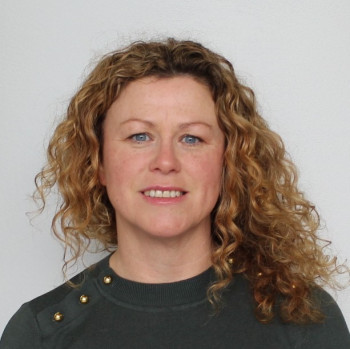
Alison Murray, Chief Commercial Officer, Planning System Transformation, MCERT. Photo: Supplied
Where are you from?
I was born in Stoke-on-Trent (Stoke), Staffordshire, United Kingdom. Stoke-on-Trent developed from its industrial roots of coal mining, pottery, and steel manufacturing. My parents are from Scotland just outside of Motherwell and moved down to Stoke with their families in the 1950s to work in the coal mines which were closing in Scotland.
What did you train in and where did you study?
I was intending to train to be an engineer but due to some poor A Level results at the age of 18, too much time partying and having fun, rather than retake I decided to do a Business Studies degree. I have a BA Honors degree in Business Studies from Staffordshire University. Later in my career I also secured my MCIPS.
What attracted you to a role in procurement?
My degree was a 4-year course with 2, 6-month work experience placements. I spent both 6 months with Michelin Tyres in a range of rotations and business functions. One of those rotations was with the purchasing department. Procurement only became a more widely used term a few years later. I really noticed how important the team was to ensure the productivity of the factory and production environment, making sure the materials were available on-site, as well as the need to secure good deals appealed to my competitive nature. It was from there I decided to apply for graduate buyer positions on finishing my degree and secured a role with Lucas Automotive. After 3 years I joined Toyota Motor Manufacturing UK as a procurement specialist with responsibility for the steel raw materials category. Toyota taught me a lot about the importance of value vs price, why good relationship management is critical to productivity and innovation… I could go on.
What advice would you give anyone considering a career in procurement?
Over my 30 years in procurement, I have seen many people enter the world of procurement from many routes. They haven’t necessarily had a university degree or formal education in procurement, or their formal education does not have what you would directly think of as a related commercial discipline.
Depending on where you are in your career journey, at the start or looking to change direction, there are a multitude of routes into procurement. If you’re interested in procurement, but not sure what it actually involves, shadow people who currently work in procurement or ask them what they do on a day-to-day basis.
Start with some specialist knowledge on the sector you want to work in, then grow your procurement career from there. Starting out in your career, your education might be through tertiary training and a commercial-related degree, or it could be a degree linked to the sector you wish to work in, for example health procurement, digital procurement or infrastructure procurement.
What are 3 things the public do not know about the role of procurement in their lives?
That procurement is involved in most services you experience or products that you use or consume. From the roads and buildings we use, to the food we buy, the medical products or services we access, to the cars we drive. Procurement has been involved in helping to produce, build or deliver.
Can you detail your top 3 achievements from your time in procurement?
- Helping to build and then lead the infrastructure procurement team in the Ministry of Education and being recognised internally and externally as leading the way.
- Seeing many of the people who I have led and managed, expand and grow their procurement careers and be successful.
- Being recognised by an industry award through the industry body ACE for my work on standardised contract terms.
What is the most unusual procurement project you’ve had to undertake?
School bus procurement – mainly because it was a solution that needed to deliver a range of outcomes, including ensuring we protected market share for the smaller providers.
What is the most exciting thing happening in procurement right now?
I know many people will say the use of AI, but I think the most exciting thing for me is actually using intelligence to make decisions, not the method to do it. This is not something new and is considered good practice, but informed decision making.
In an ideal world where you were not confined by a budget, what would you introduce to procurement that could help the industry function and develop?
Extensive soft skills training which focuses on the capabilities of relationship management, building commercial acumen.